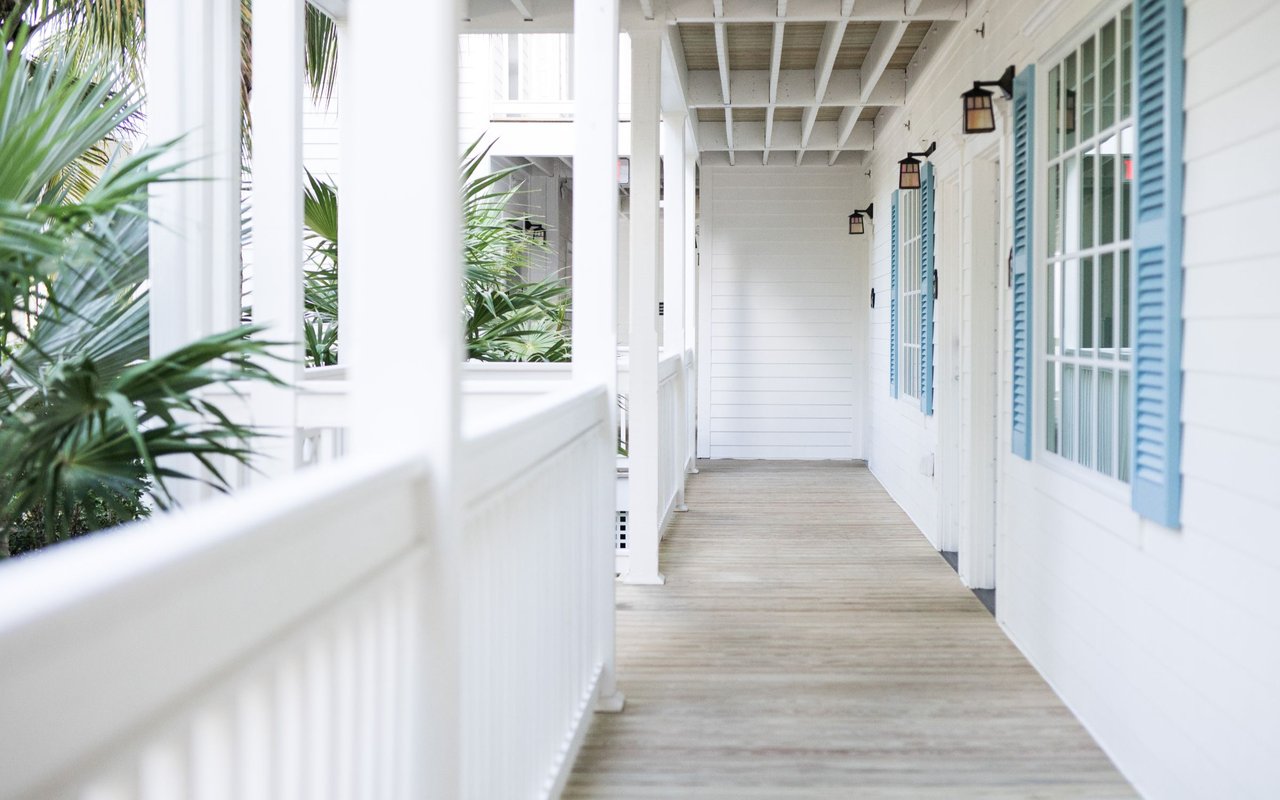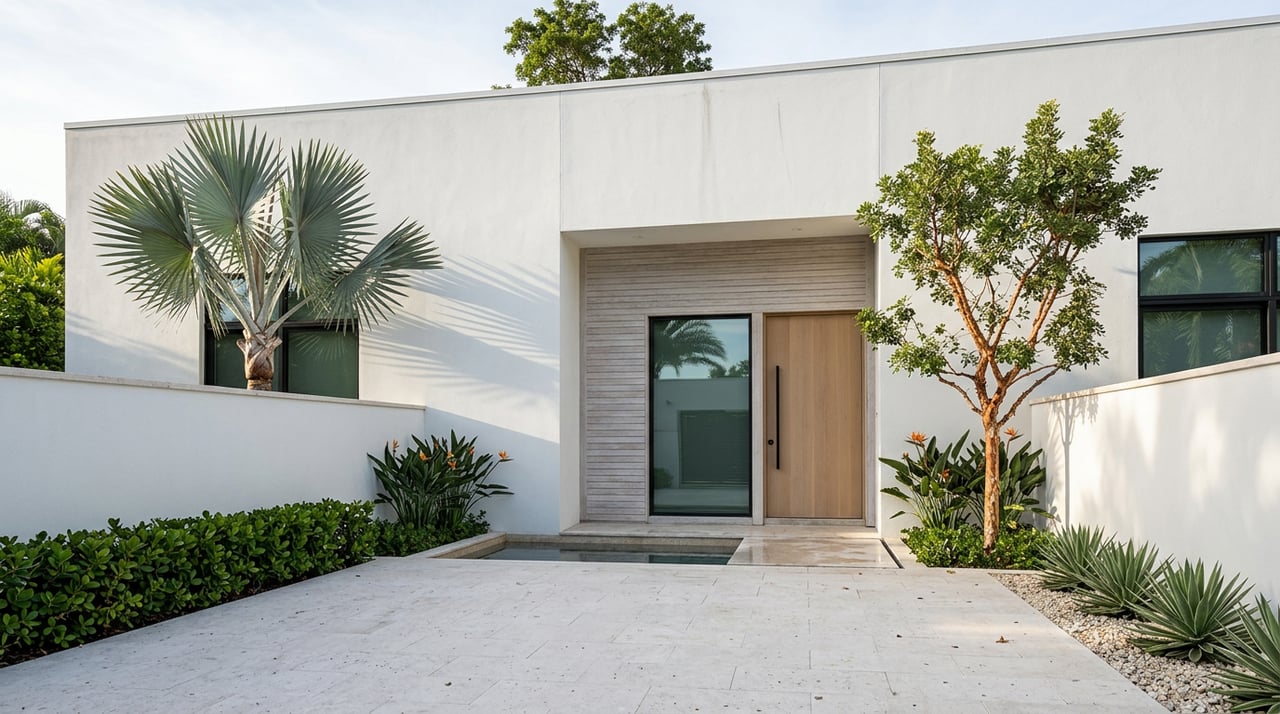
Two houses, same asking price, same square footage, same year built. One sits in Boca Square, a mid-century pocket of East Boca with no HOA. The other sits in Boca Bridges, a gated community in West Boca with a clubhouse, a resort pool, and a homeowners association that collects roughly $600 a month. A buyer comparing these two on list price alone would call it a wash. A buyer who has owned a Boca Raton homestead since the early 2010s and is about to sell it would find out, usually during underwriting, that the two houses cost meaningfully different amounts to actually live in. Not because of the sticker price. Because of what the move does to a tax bill that has been quietly capped for over a decade.
That gap between the number on the listing and the number on the closing statement is the thing worth understanding before anyone writes an offer.
The comparison everyone runs, and the one they skip
Ask a buyer weighing East Boca against West Boca what they're comparing and the answer is almost always list price against HOA dues. It's the obvious math. It's also incomplete, because it ignores the one variable that changes the most for anyone who has owned a Florida homestead for more than a few years: what happens to the property tax bill when the address changes.
Florida's Save Our Homes provision caps the annual increase in a homesteaded property's assessed value at 3 percent, or the change in the Consumer Price Index if that's lower. The Florida Department of Revenue lists the 2026 cap at 2.7 percent. Over ten or fifteen years of Boca Raton appreciation, a home's market value can pull far ahead of its capped assessed value. That gap, sometimes six figures wide, is the part of the home's worth the owner has not been paying tax on. The Palm Beach County Property Appraiser says the Save Our Homes cap ends when the home is sold. It does not have to disappear for the seller, though, if they move correctly.
What the cushion is actually worth
Picture a Boca Raton owner who bought in 2011 for $400,000 and filed homestead that year. Assessed value resets to market value in the first homestead year, then grows at the capped rate from there. Run that forward at close to the maximum allowable increase most years and the assessed value lands somewhere in the mid $500,000s by 2026, while the same house, given how much the city has appreciated, might carry a market value approaching $950,000. That gap, call it roughly $350,000 to $400,000 in this illustration, is the Save Our Homes differential. The Palm Beach County Property Appraiser says it is portable, up to a cap of $500,000, to a new Florida homestead, provided the owner establishes the new homestead within three tax years of abandoning the old one and files the transfer paperwork on time.
The mechanism matters because it changes the answer to a question buyers ask backwards. They ask what the new house costs. The better question is what the new tax bill costs, because that number depends on how much of the old cushion survives the move, not on the new home's price alone.
The paperwork that decides whether the cushion survives
The Palm Beach County Property Appraiser's office is direct about the mechanics: portability lets an owner transfer up to $500,000 of the accumulated difference between market and assessed value to a new Florida homestead. The transfer is not automatic. It requires filing for the new homestead exemption and the portability transfer, with an application deadline of March 1.
There's a second layer of stability worth knowing about heading into an offer this year. Anyone closing on a Boca Raton home in 2026 is working under the current rules: 3 percent cap, $500,000 portability ceiling, three-year window, March 1 filing deadline.
Then there's the club
Property tax is only half of what changes when a Boca Raton move crosses from East to West or back. The other half is the fee structure attached to the community itself, and in Boca Raton that structure varies more than most buyers expect walking in.
| Community | Approximate Monthly Cost (unless noted) | What It Covers |
|---|---|---|
| Boca Square (East Boca) | $0 | No HOA at all, quarter-acre lots, buyer covers only property tax and insurance |
| Long Lake Estates | About $525 | Gate security and lakeside common areas, no clubhouse or organized amenities |
| Boca Bridges (West Boca) | About $600 | Resort-style pool, tennis, pickleball, and clubhouse programming, no separate equity buy-in |
| Boca West (West Boca) | About $108 annually for club membership (not a monthly cost), plus a separate HOA line | Golf courses, tennis, fitness centers, and social programming layered on top of standard HOA dues |
| The Sanctuary (East Boca) | About $1,500 | Armed security, patrol boats, and minimal built amenities across just 97 waterfront estates |
The range runs from nothing to close to $18,000 a year, and the number has almost nothing to do with which side of I-95 the home sits on. Boca Square, East Boca, charges zero. The Sanctuary, also East Boca, charges more than most West Boca clubs. West Boca's Boca Bridges undercuts West Boca's Boca West by a wide margin because one is a straightforward gated HOA and the other layers club membership on top of it. The location tells a buyer almost nothing about the fee. The specific community does.
Running the two numbers together
This is where the two mechanisms compound instead of standing apart. Take that same hypothetical East Boca owner with a $400,000 cushion moving into a similarly priced West Boca home. If the new home's market value is equal to or higher than the old one, the full cushion transfers, up to the $500,000 cap, and the new assessed value starts well below market. Combined with Boca Raton's effective property tax rate, which for the 2025-2026 assessment year runs close to 1.02 percent of assessed value once county, school, and municipal millage are combined, that cushion is worth real annual dollars, not a rounding error.
Now stack the HOA question on top. If that West Boca destination is Boca Bridges, the buyer adds about $7,200 a year in dues to a tax bill that portability just protected. If it's Boca West, the buyer adds a membership fee plus a separate HOA structure on top of the tax savings. If the destination happens to be Boca Square instead, moving within East Boca, the buyer keeps the zero-HOA structure and the portability math is the only variable in play.
None of this shows up on a listing sheet. It shows up in the mortgage lender's escrow calculation, usually after the offer is already signed, which is exactly when it's most expensive to discover.
The five-minute check that prevents the surprise
Before writing an offer that crosses zip codes within Boca Raton, a few numbers are worth pulling ahead of time. Palm Beach County's property tax bills vary widely block to block. One 2026 estimate put Boca Raton's typical bill at $4,905, with a documented range from roughly $2,517 in the 33434 zip code to roughly $9,089 in 33432, driven largely by differing school district levies and assessment districts layered on the base millage. That's before anyone's individual homestead cushion or portability transfer enters the picture. Pulling the current tax record on the specific parcel, not the neighborhood average, is the only way to know what a move actually costs.
Before the offer, ask these
Does the Save Our Homes cushion transfer if I'm moving from a condo to a single-family home, or vice versa? Yes. Portability applies to the transfer of the assessment differential between any two Florida homesteads, regardless of property type, as long as the timing and filing requirements are met.
What happens if I miss the March 1 deadline? Late filing is sometimes accepted, but approval isn't guaranteed. Filing on time is the only way to count on the transfer landing in the correct tax year.
Does any of this apply to an investment property? No. Portability only applies to a primary residence with an active homestead exemption. Non-homestead properties are assessed differently and don't carry a Save Our Homes cap to transfer in the first place.
The list price gap between East Boca and West Boca is the number every buyer sees first. The tax reset and the fee stack are the numbers that actually decide what the move costs over the next decade, and they rarely make it into the conversation before contract. If you're weighing a move across Boca Raton and want the real total, not just the asking price, Vlasek Real Estate Group can walk the specific parcel numbers with you before you write the offer. Request Your Personalized Consultation and we'll run it together.
This article is general information, not legal, tax or financial advice. Consult a qualified professional about your situation.