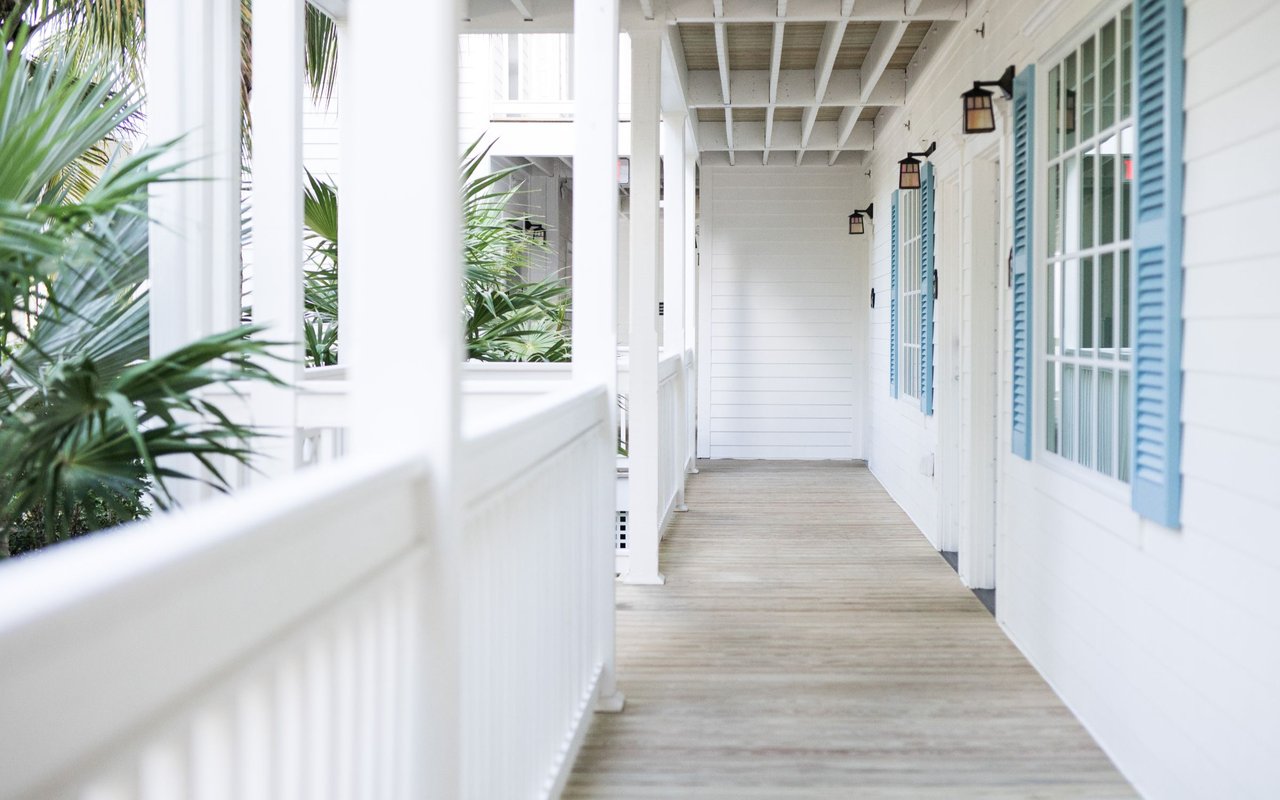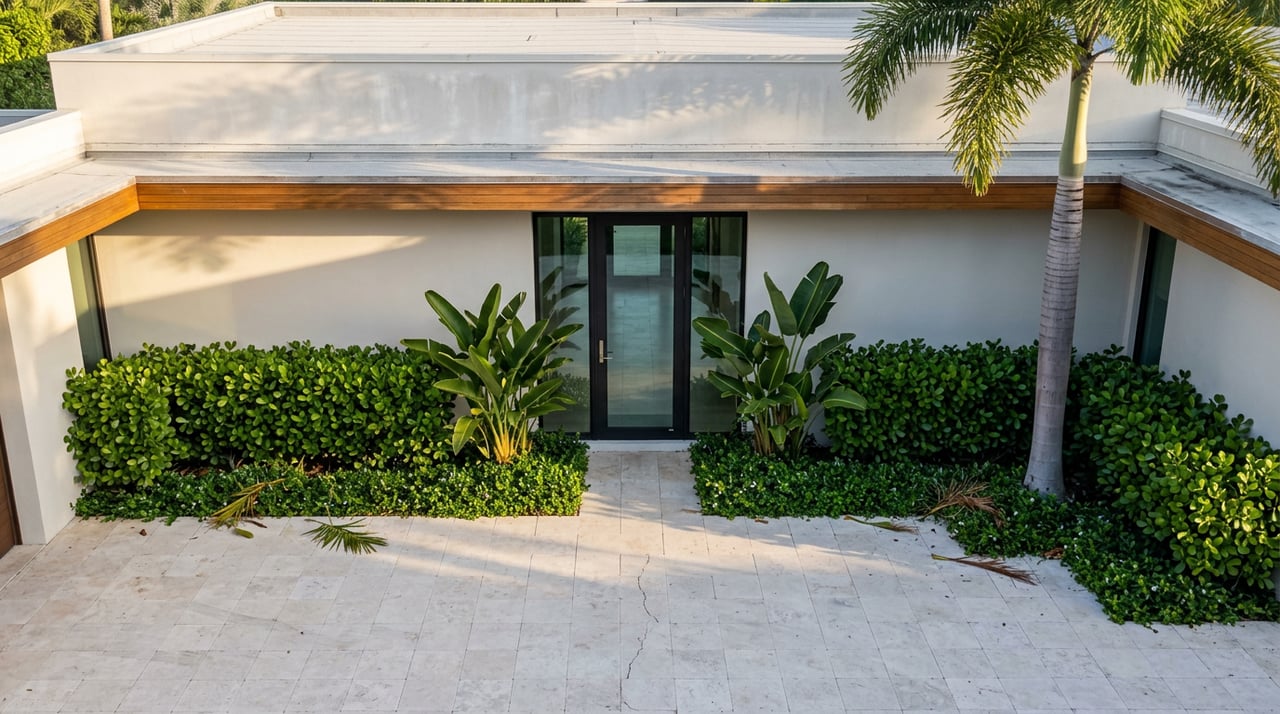
Buy a house inside one of Delray Beach's five historic districts and you inherit a permitting quirk that catches most buyers off guard: the same seven-member board that has to sign off on a new coat of exterior paint is also the board that has to sign off on tearing the house down. There is no fast lane for small projects and a slow lane for big ones. A Certificate of Appropriateness, the city's shorthand is COA, governs both, and it applies whether the structure in question is a protected architectural gem or the kind of dated add-on a buyer assumed they could clear without a second thought.
That single fact changes how a renovation-minded buyer should read a listing in Del-Ida Park, Nassau Park, the Marina Historic District, the Old School Square Historic District, or West Settlers. The house you are buying might come with a straightforward path to a rebuild. It might not. The MLS photo will not tell you which.
One process, regardless of what you're asking for
The city's own rules make no distinction between cosmetic and structural. Changing the exterior color of a house inside a historic district requires an approved Certificate of Appropriateness along with a Building Materials and Color Sample Form, the same instrument used to review additions, new construction, and full demolitions. Under the city's Land Development Regulations, demolition of a structure within a historic district requires review and approval of a Certificate of Appropriateness whether the building is contributing or non-contributing, and no permit for the alterations or redevelopment that follow can be issued until that certificate is in hand.
The board itself has been doing this since 1987, when the city adopted its historic preservation ordinance and created a seven-member Historic Preservation Board to administer it. The board's charge, per the city, is to review applications for alterations, additions, new construction, renovations, and demolition requests that affect the exterior of designated historic sites and properties. A single-family home only needs COA review. Anything else, commercial space, a church, an institutional use, needs both a COA and a full site plan application. Variances, waivers, and other relief requests inside a district also route through the same board.
None of this means Delray is unusually restrictive. It means the review threshold is binary, not proportional. A deck addition and a full demolition enter the same door.
Five districts, one process
The five districts do not share an architectural identity. What they share is the board that reviews them.
| District | Locally designated | What defines it |
|---|---|---|
| Old School Square Historic District | 1987 | Delray's largest district, 176 structures with 101 at least 50 years old, dominated by frame vernacular construction, includes the stretch known as Banker's Row |
| Marina Historic District | 1988 (National Register, 2014) | Mediterranean, Mission Revival, Monterey, and Art Moderne homes built between 1922 and 1943 along the Intracoastal Waterway |
| Del-Ida Park | 1988 | 58 acres and 151 structures on a diagonal street grid platted in 1923, mostly Mediterranean Revival and Craftsman Bungalow |
| Nassau Park | 1988 | Seventeen Cape Cod Colonial Revival cottages on a two-block stretch of Nassau Street, platted in 1935 |
| West Settlers Historic District | 1997 | Associated with the city's first African-American settlement, established in 1894, with a school, three churches, and a Masonic Lodge founded between 1895 and 1920 |
Two of the five also carry a National Register of Historic Places listing on top of the local designation, which matters later for tax purposes. The Marina Historic District was added to the National Register in 2014.
The point of laying these out side by side is not trivia. It is that a buyer touring Del-Ida Park on Monday and the Marina district on Tuesday is looking at two different architectural stories, two different street patterns, two different reasons the city decided to protect them, and the exact same review board waiting on the other side of closing.
Contributing versus non-contributing is the buyer's real question
Inside a historic district, individual structures are classified as either contributing, meaning the building supports the district's historic character, or non-contributing, meaning it does not. Buyers often treat non-contributing status as a green light. It is not one. A non-contributing structure still sits inside a designated district, and its demolition still requires a Certificate of Appropriateness under the same LDR section that governs contributing buildings. The distinction affects how the board weighs the request, not whether a request is required at all.
This is the specific place a renovation budget goes sideways. A buyer who plans to clear a 1960s addition on an otherwise historic lot and build new needs to know, before the inspection contingency runs out, whether that addition reads as contributing or non-contributing to the district, and needs to understand that either way, the demolition itself is a board matter, not a contractor matter.
Build the pre-application step into your contract timeline
Delray Beach's Historic Preservation staff will meet with a buyer or their design team before a formal Certificate of Appropriateness application is submitted. That conversation is where a buyer learns whether their renovation plan is likely to sail through at staff level or whether it is headed to a full board hearing, and roughly how long that hearing adds to a project timeline.
The mistake is treating that conversation as something to schedule after closing. For a buyer with a firm renovation plan, the smarter sequence is to request the meeting during the due diligence period, while there is still room to adjust the offer or walk away if the scope the seller advertised turns out to require more review than the buyer expected. An agent who has been through this before knows to raise the question early rather than let it surface as a surprise change order six months into ownership.
The incentive that changes the math
The restriction comes with an offset that does not get mentioned nearly as often as the paperwork does. Delray Beach offers a Historic Property Ad Valorem Tax Exemption for qualifying improvements to historic properties, and separately, the federal government offers a tax credit worth up to 20 percent of the cost of rehabilitating a historic, non-owner-occupied property inside a Nationally Listed Historic District or an individually listed structure.
That second credit only applies to income-producing property, not a primary residence, and it only applies where the National Register overlay exists, which narrows the field to districts like Marina rather than all five. But for a buyer weighing a rental or a small investment property inside one of the nationally listed pockets, the math on a careful, in-kind rehabilitation can look meaningfully better than the math on the same renovation a few blocks outside any district line.
Choosing between two blocks
The practical decision most buyers face is not whether historic districts are worth it in the abstract. It is a specific choice between a cottage on one side of a boundary line and a similar-looking house a few streets outside it, where the second house comes with none of this review and none of the incentive.
There is no universal right answer. A buyer planning a light, in-kind restoration of a contributing structure in Del-Ida Park or Nassau Park is buying into a process built for exactly that kind of project, plus a tax exemption that rewards the work. A buyer who has already mentally demolished the house and started sketching something new should treat the demolition COA as a real step in the timeline, not a formality, and should ask the contributing-versus-non-contributing question before the offer goes in, not after.
Either way, the question belongs in the due diligence period, addressed to city staff directly, not left for the first contractor meeting after keys change hands.
FAQ
Does a non-contributing structure need historic board approval to be demolished? Yes. Delray Beach's Land Development Regulations require Certificate of Appropriateness review and approval for the demolition of any structure within a historic district, contributing or non-contributing, before a building permit for the redevelopment can be issued.
How old does a house have to be before it can be designated historic in Delray Beach? The city's threshold is 50 years old, combined with historical or architectural significance. A house does not have to sit inside one of the five existing districts to be individually designated if it meets that standard.
Do all five historic districts qualify for the federal 20 percent rehabilitation tax credit? No. That credit applies to non-owner-occupied properties within a Nationally Listed Historic District or an individually National Register-listed structure. Only some of Delray's five local districts carry that additional national designation, so the credit is not available uniformly across all five.
Can I change my home's exterior paint color without board approval if I'm in a historic district? No. Changing exterior color requires an approved Certificate of Appropriateness along with a Building Materials and Color Sample Form, even though paint is reversible and does not alter the structure itself.
If you are weighing a purchase inside one of these five districts, or trying to figure out what a specific historic designation would actually mean for your renovation plans, Vlasek Real Estate Group can walk the district boundaries, the contributing status, and the review timeline with you before you write an offer. Request Your Personalized Consultation.